
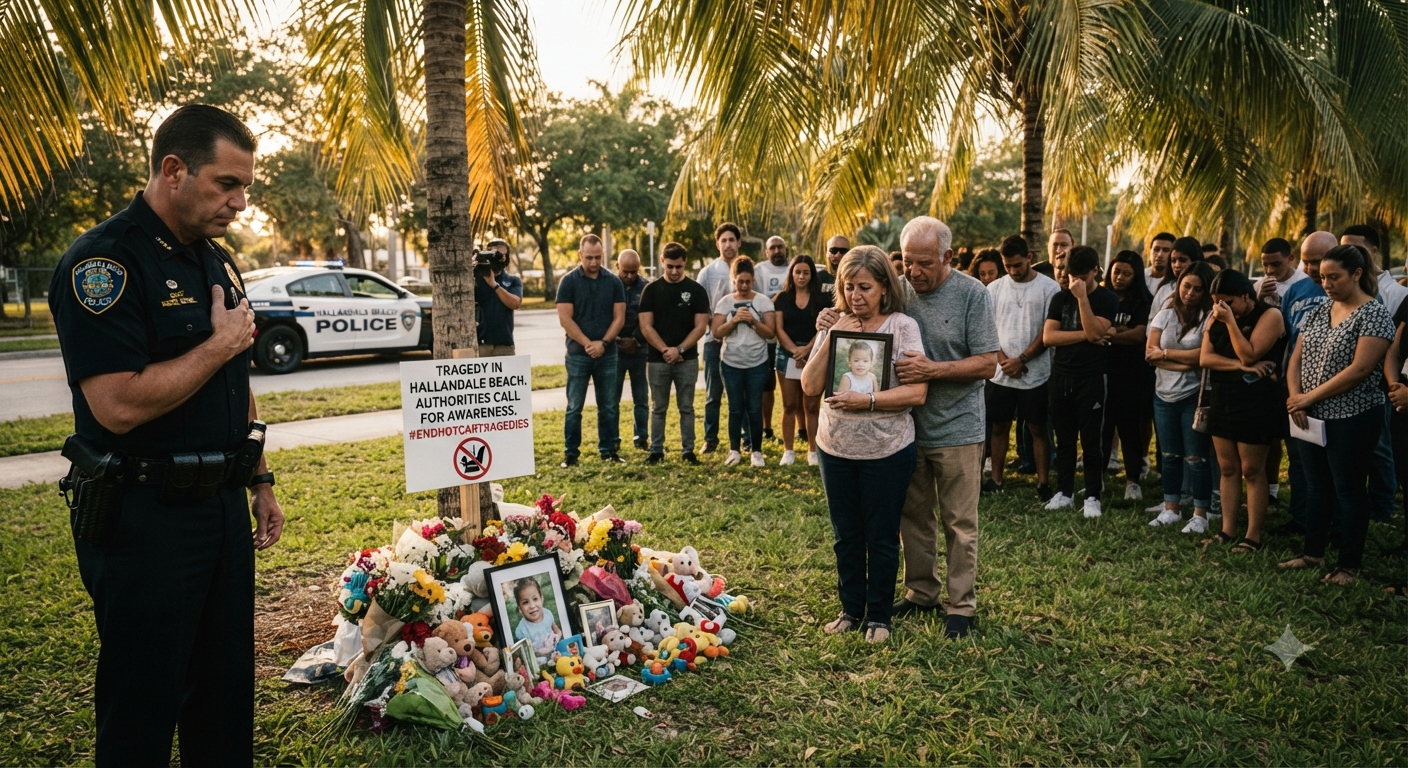
The South Florida community is currently grappling with a heart-wrenching loss following the death of a 2-year-old toddler who passed away after being left inside a hot vehicle in Hallandale Beach. The incident, which occurred on Sunday, July 5, 2026, has ignited a renewed sense of urgency among local authorities and child safety advocates regarding the extreme dangers of leaving children unattended in vehicles during the sweltering summer months.
The Incident
The tragic event unfolded on a day when the environmental conditions in Hallandale Beach were particularly severe. Temperatures in the area reached 93 degrees, with a heat index that made conditions feel between 103 and 108 degrees.
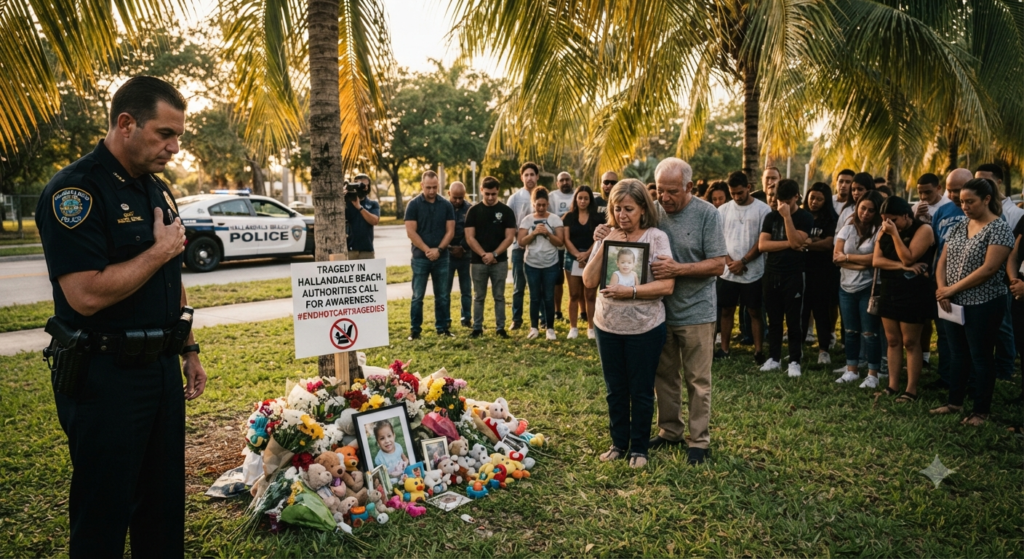
According to reports, the toddler was under the care of a babysitter at the time of the incident. The child was eventually transported to an area hospital at approximately 1:35 p.m. ET, where they were sadly pronounced dead. The Hallandale Beach Police Department is currently conducting a thorough investigation into the circumstances surrounding the child’s death.
A Growing National and State Crisis
The death of this toddler is a sobering reminder of the ongoing crisis of hot car fatalities across the United States. According to the organization Kids and Car Safety, this incident marks the 10th national hot car fatality of 2026. Within the state of Florida alone, this is the fourth such tragedy this year.
Adding to the community’s grief and concern, this was the second incident of a child being left in a hot vehicle in South Florida within the same week. These figures underscore a disturbing trend that experts are desperate to reverse through increased public awareness and proactive safety measures.
The Science of Heatstroke in Vehicles
Understanding why these incidents are so lethal is essential for prevention. Vehicles, particularly in climates like Florida’s, act as heat traps. Experts from Kids and Car Safety note that children’s bodies overheat three to five times faster than those of adults.
Furthermore, the interior temperature of a vehicle can rise to dangerous levels within the first 10 minutes of being left unattended, even when the outside temperature might seem manageable. When a child is trapped in these conditions, the internal body temperature can rise rapidly, leading to organ failure and, as seen in this tragic case, death.
Authorities Call for Vigilance
In the wake of this tragedy, Hallandale Beach Police Chief Michel Michel has issued an urgent plea to the public. Authorities are emphasizing that these incidents often occur due to a lapse in routine, sometimes referred to as “autopilot,” where a caregiver—distracted by a phone call, an unexpected errand, or a change in schedule—may momentarily forget that a child is in the vehicle.
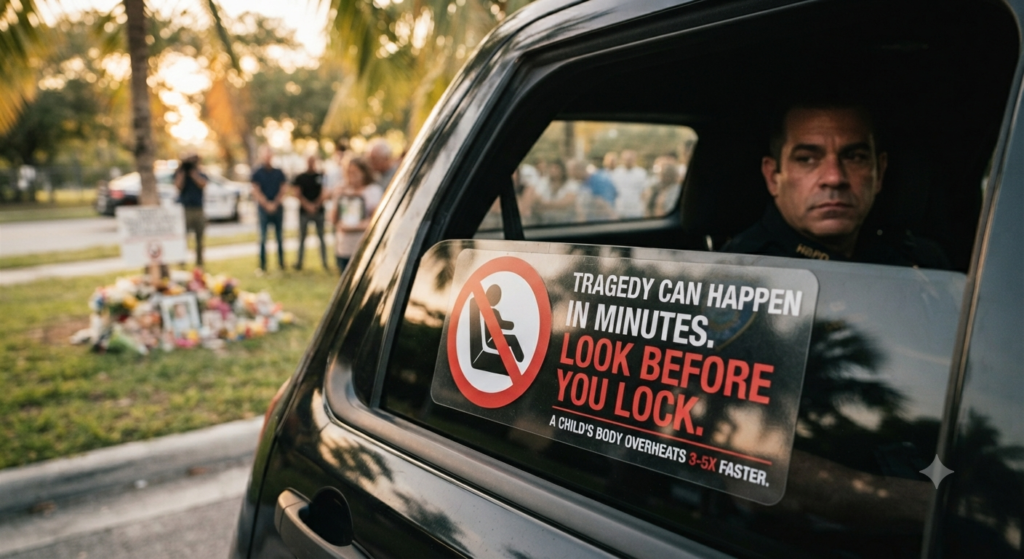
To combat this, officials and safety organizations recommend several life-saving habits:
- The Look-Before-You-Lock Habit: Caregivers should make it a consistent, non-negotiable habit to check the back seat every single time they exit a vehicle, regardless of whether they believe the vehicle is empty.
- Physical Cues: Placing an essential item, such as a cell phone, purse, or briefcase, in the back seat serves as a physical prompt that forces a caregiver to look into the back of the car before walking away.
- Heightened Awareness: Understanding that “autopilot” can happen to anyone, even the most attentive parents and guardians, is the first step toward preventing a catastrophe.
Moving Forward
As the family mourns and the investigation continues, the Hallandale Beach community and the broader public are reminded of their collective responsibility to watch out for children. Safety experts stress that if a child is seen alone in a car, bystanders should act immediately by calling emergency services.
While no amount of advocacy can erase the pain of this loss, officials hope that by sharing these warnings and fostering a culture of vigilance, they can prevent another family from experiencing such a profound and preventable tragedy.


Leave a Reply