
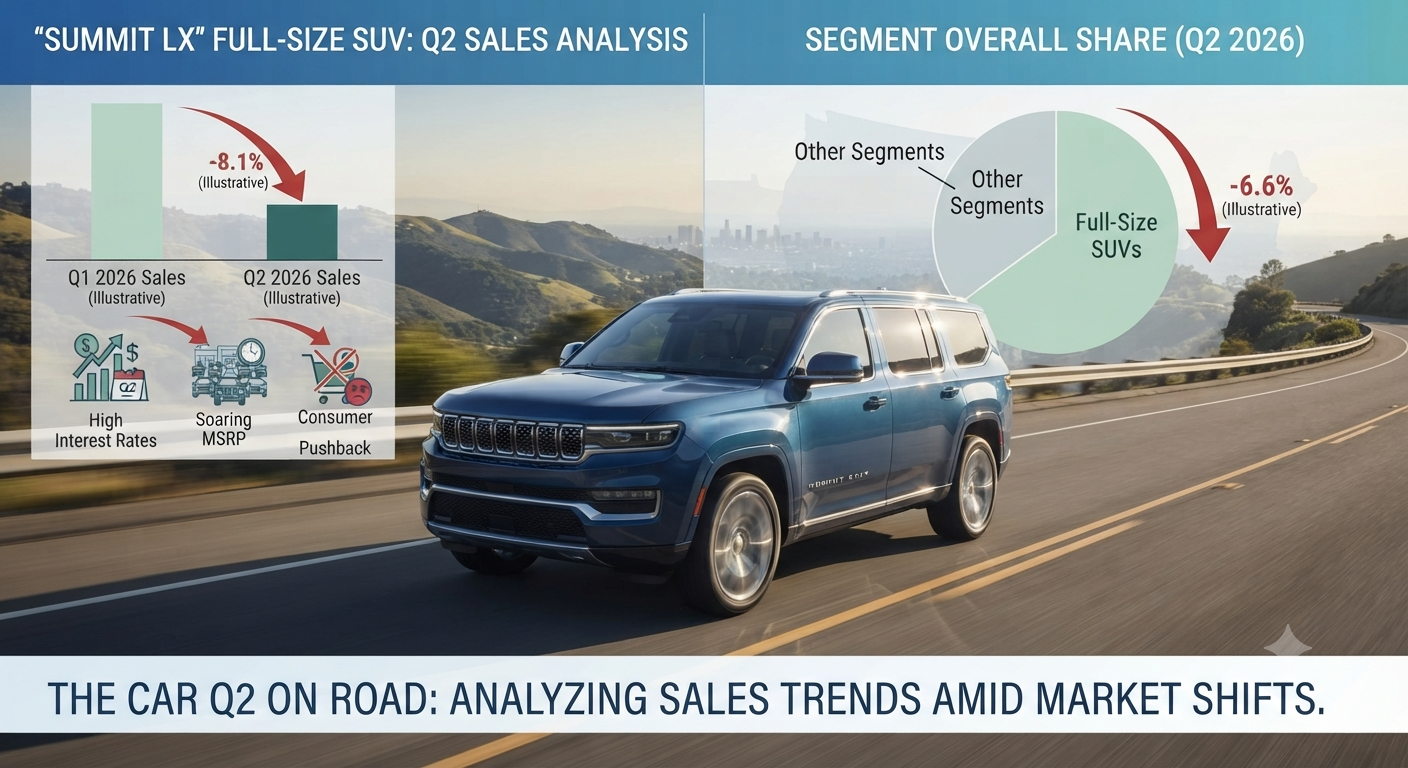
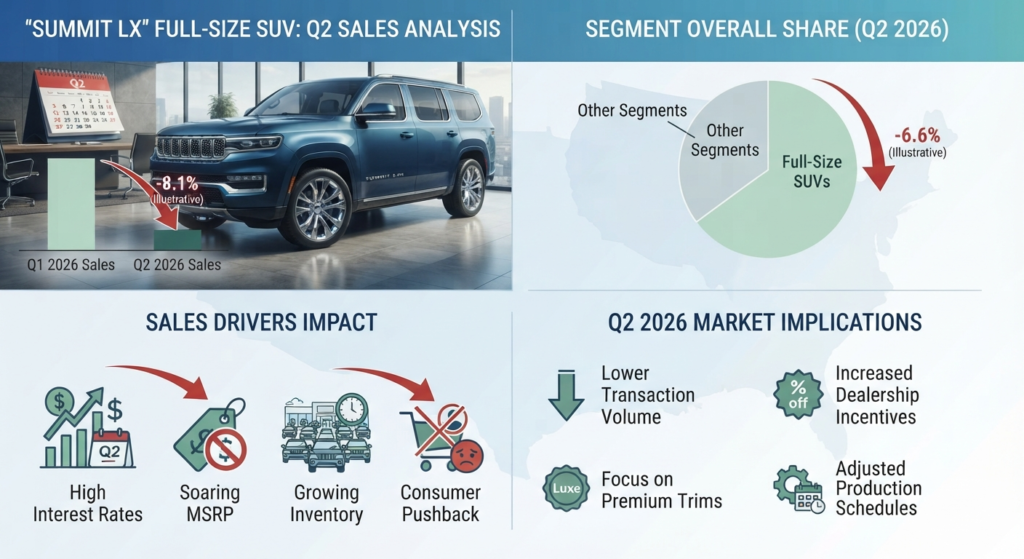
The automotive landscape in the United States is currently undergoing a notable transition. For years, the full-size SUV segment—characterized by body-on-frame, truck-based, three-row vehicles—has been considered largely immune to broader economic fluctuations. However, data from the second quarter of 2026 indicates a departure from this trend, with the segment experiencing an overall sales decline of 6.6%. As inventory levels rise and consumer pushback against soaring prices intensifies, the industry is witnessing a significant market correction.
The State of the Segment: A General Downturn
The decline in full-size SUV sales has been widespread across the sector, affecting even the most dominant players. General Motors, despite remaining the #1 automaker in U.S. sales for Q2 2026, saw sales across its brands dip by 4% year-over-year. Within the full-size SUV category, the impact was even more pronounced for specific models:
- Chevy Tahoe: Sales fell 8.1%, totaling 27,816 units compared to 30,268 in the same quarter last year.
- GMC Yukon: Experienced a 3.9% decline, dropping to 23,896 units.
- Ford Expedition: Faced a significant 26.97% drop, with sales falling to 22,857 units.
- Chevy Suburban: Saw a 20.4% reduction, ending the quarter at 13,014 units.
- Cadillac Escalade: Recorded a 5.9% decline, down to 10,999 units.
While the segment as a whole struggled, there were notable exceptions. The Jeep Grand Wagoneer saw a substantial 56.5% growth in sales, and the Toyota Sequoia, Nissan Armada, and Infiniti QX80 also reported positive performance during the quarter.
The Economics of the Slowdown: Affordability and Inventory
The primary driver behind this cooling market appears to be a fundamental mismatch between vehicle pricing and consumer purchasing power. Over the past several years, the average new vehicle price has climbed past $50,000, while the full-size SUV segment now frequently commands prices well into the $70,000 range.
Factors Contributing to the Sales Dip:
- Stagnant Wages: While vehicle prices have exploded, consumer wages have not kept pace with these increases.
- Interest Rates and Costs: High interest rates, coupled with rising insurance premiums, have made monthly payments increasingly difficult for the average buyer to manage.
- Inventory Accumulation: Nationwide, new vehicle inventory has reached a 90-day supply, with SUV inventory specifically climbing to a 72-day supply—the healthiest, yet most concerning, level seen since 2019.
- Consumer Pushback: After years of SUV dominance, consumers are showing signs of exhaustion regarding high prices, leading many to walk away from new purchases or opt for the used market instead.
The Role of Technology and Trims
Despite the downward trend in sales, manufacturers continue to push the boundaries of technology and luxury within the segment. The 2026 Chevrolet Tahoe, for instance, remains a benchmark for the category, featuring an updated 17.7-inch diagonal center touchscreen—a best-in-class offering—and advanced driver-assistance features like the available Super Cruise hands-free technology.
These vehicles are marketed as versatile tools for family life, offering robust towing capacities and diverse powertrain options, including the efficient 3.0L Duramax Turbo-Diesel and the powerful 6.2L V8. However, the inclusion of such premium features contributes to the higher MSRPs that are now causing friction in the marketplace.
Future Outlook
As the automotive industry moves into the second half of 2026, the full-size SUV segment is at a crossroads. Industry analysts suggest that when inventory levels rise this quickly, market corrections typically follow in the form of heavy incentives and price adjustments.
Manufacturers like Ford are already navigating complex transitions, retooling plants to focus on different platforms and high-margin segments while managing supply chain timing. The ultimate test for the remainder of the year will be whether automakers can effectively balance their commitment to high-end, feature-rich SUVs with a growing consumer demand for more budget-conscious transportation. As one analyst noted, “Something has to give,” and the current Q2 data may be the first clear signal of a larger transformation in the American automotive market.


Leave a Reply